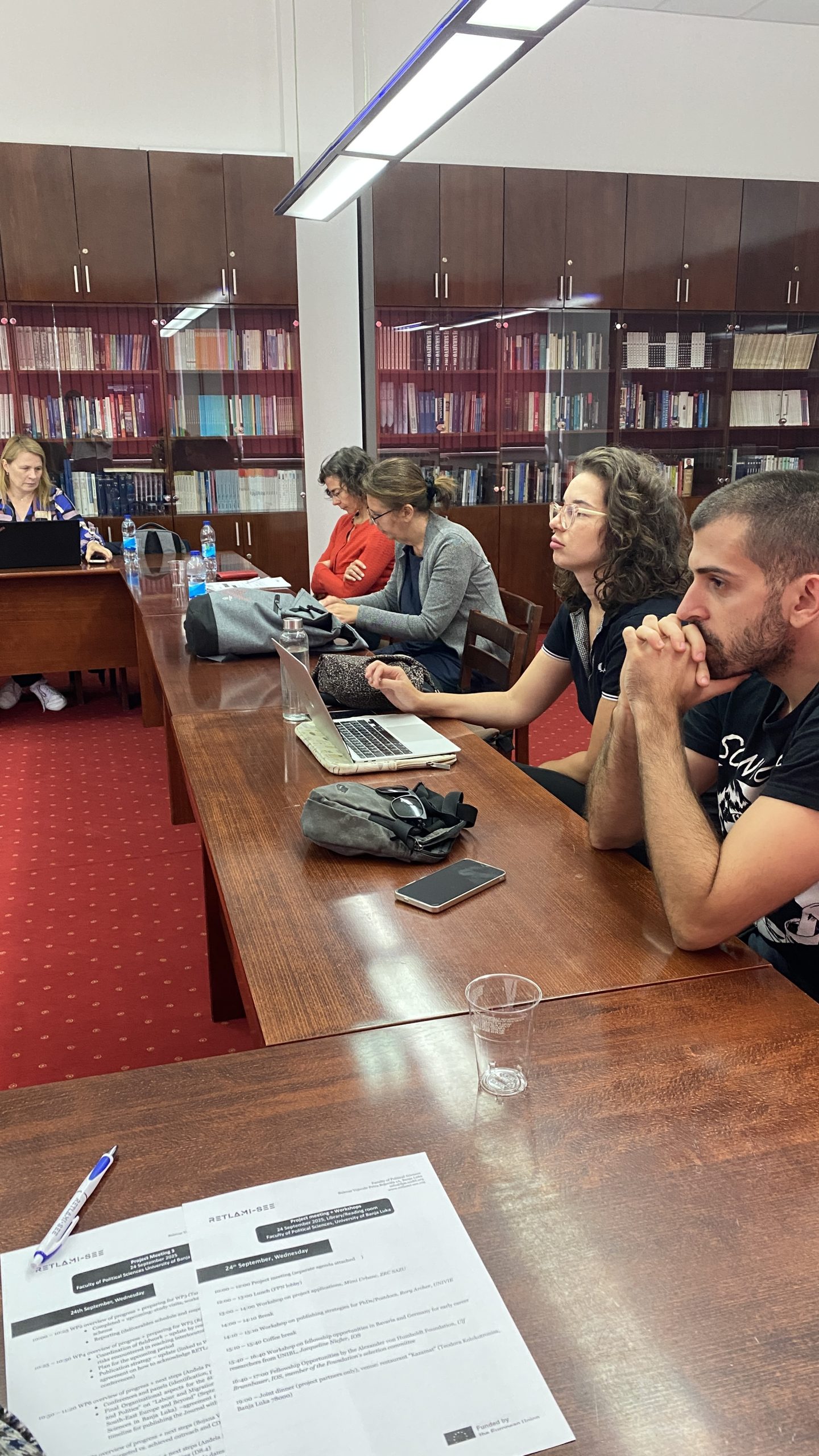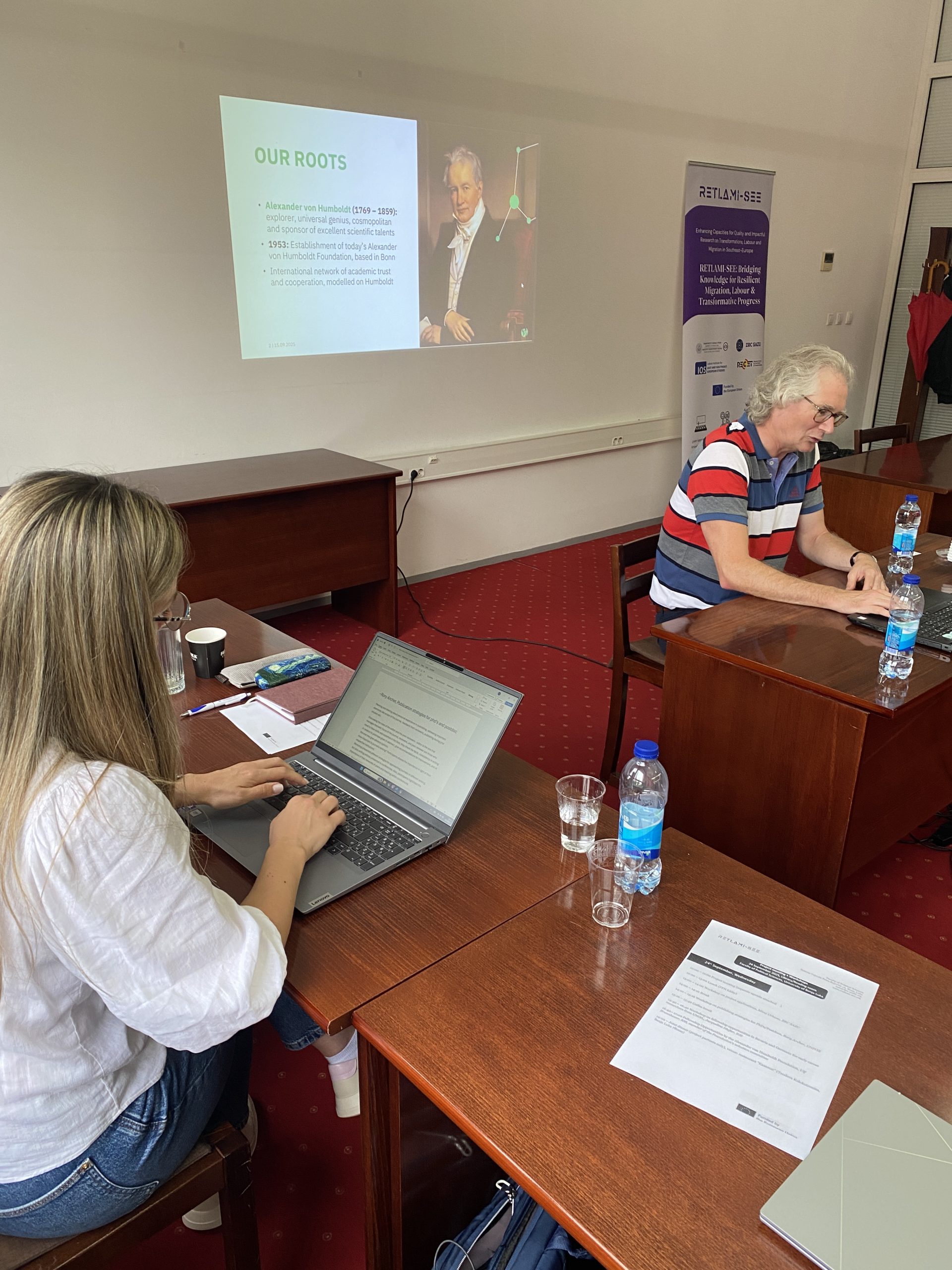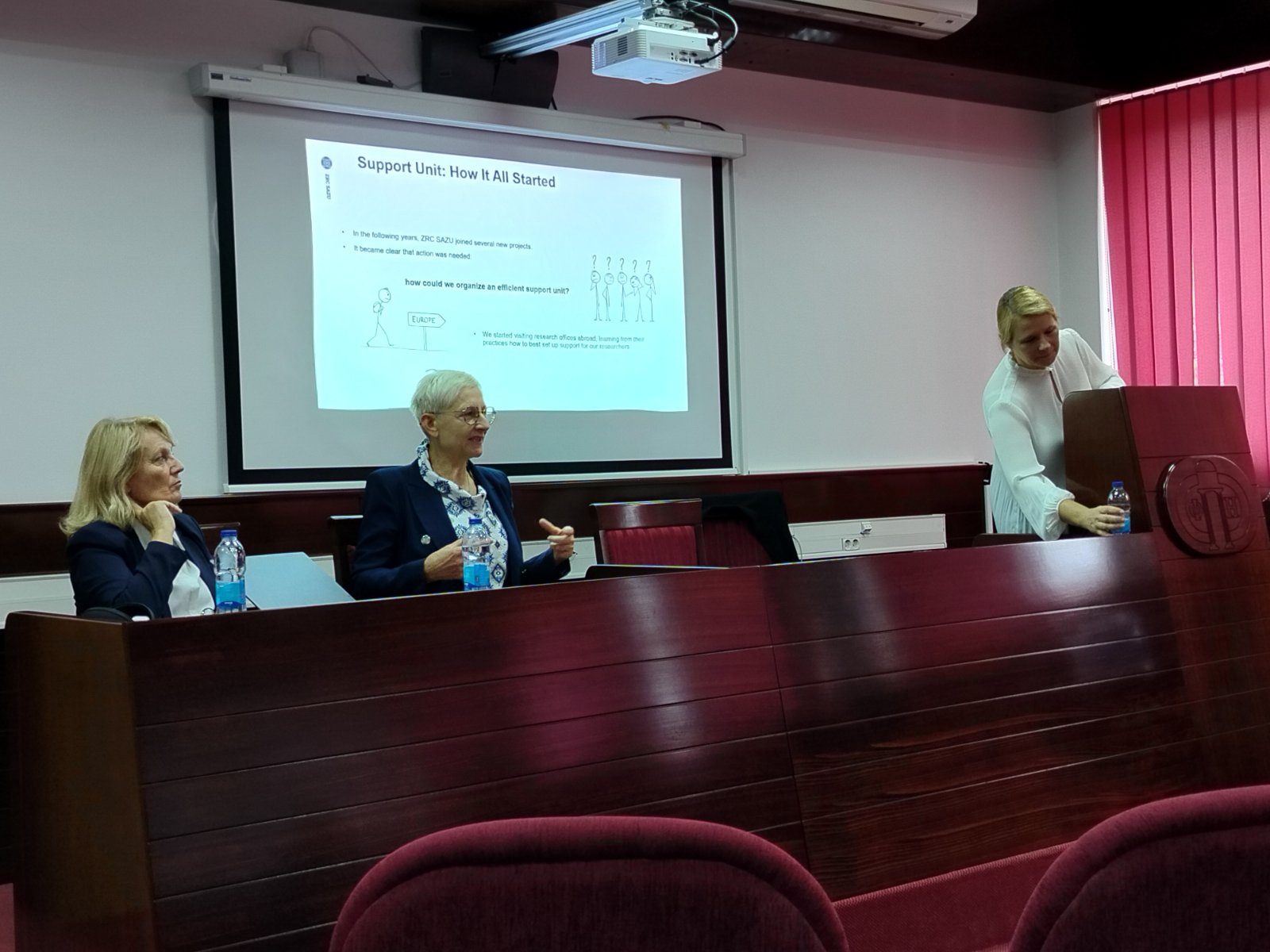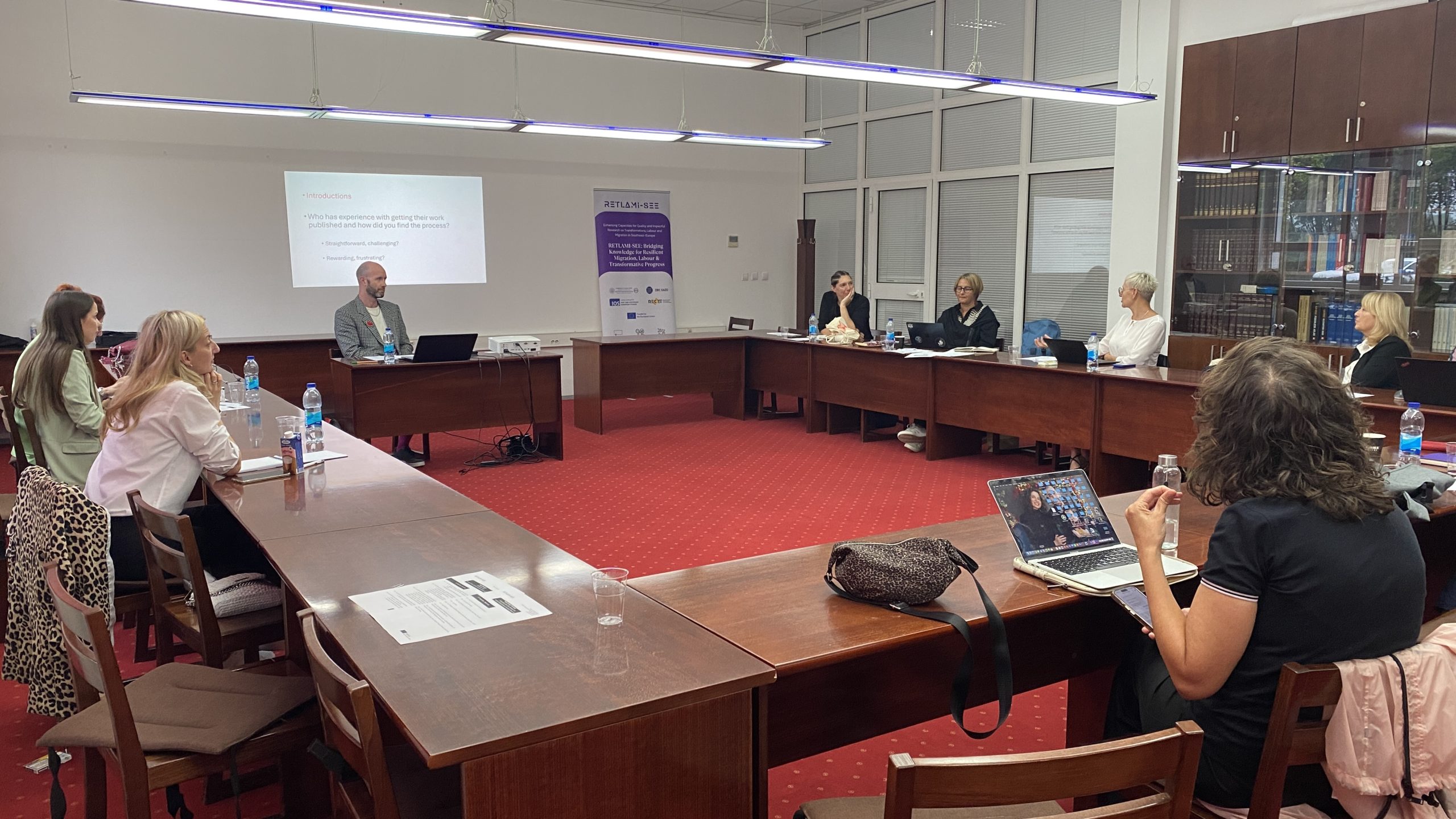
On 24–25 September 2025, the Faculty of Political Science (FPN) at the University of Banja Luka hosted a series of workshops organized under the RETLAMI-SEE project. Over the two-day event, experts from partner institutions in Slovenia, Austria, and Germany led interactive sessions on securing research funding from EU programs, strategies for academic publishing, and fellowship opportunities to support research mobility. PhD candidates, postdoctoral researchers, and research administrators from UNIBL took part in the workshops, gaining valuable insights and advice to further their professional development and improve the support services they provide.
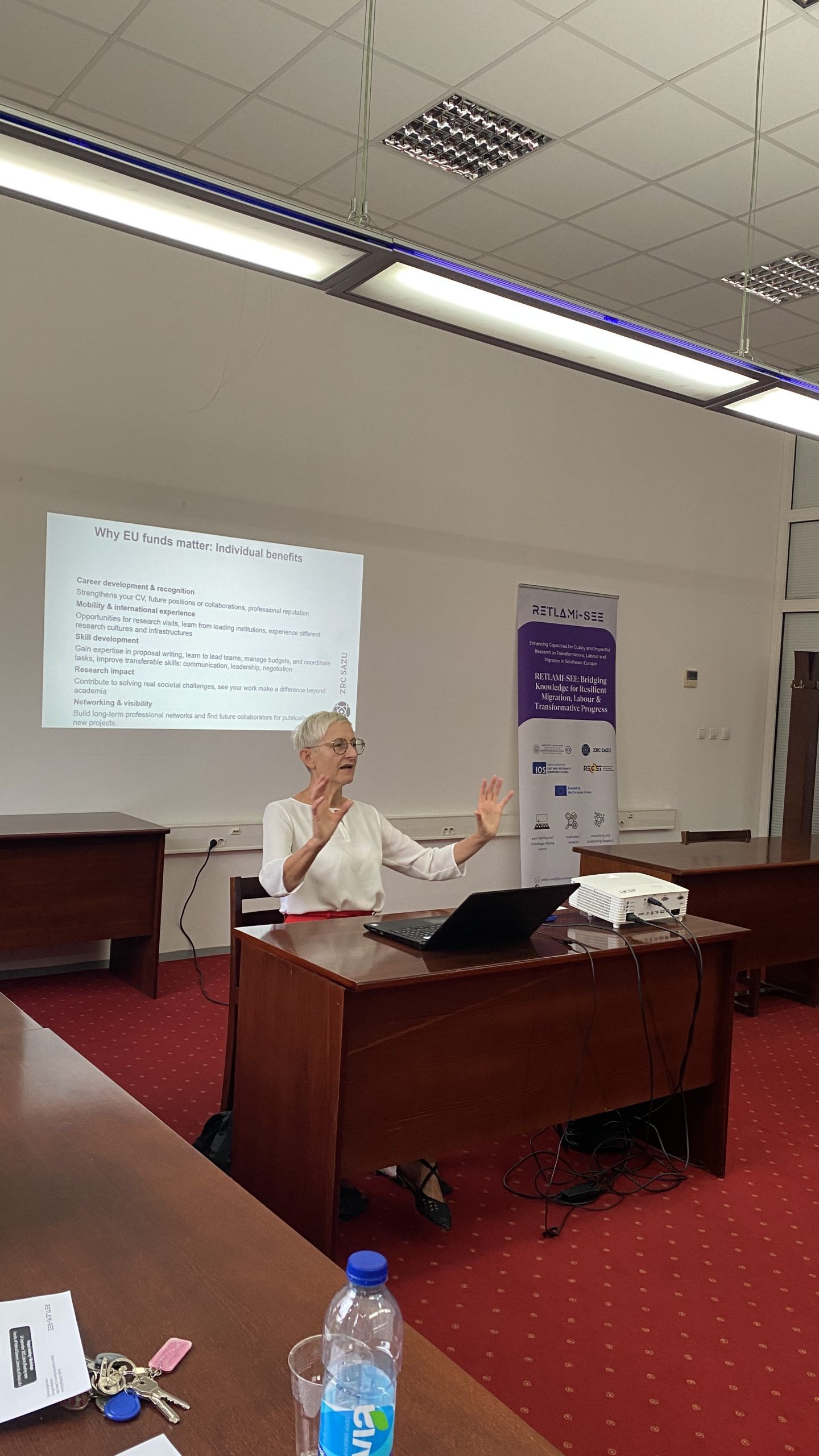
Project Applications for EU Funding – Mimi Urbanc (ZRC SAZU)
The first workshop covered key aspects of obtaining research funding from European Union programs. Participants learned why it is crucial to understand the landscape of EU funding instruments, the differences between “top-down” and “bottom-up” approaches in funding calls, and how to align their own project ideas with the interests of funders and program priorities. Mimi Urbanc emphasized that successful project acquisition is essentially a “game of probabilities” requiring time, consistency, and a clear vision – “it’s not a race, but a marathon.” Through discussion and a Q&A session, the audience received practical tips drawn from real experiences with various EU programs. Key takeaway: securing EU funds is not just about obtaining research money; it is about co-creating the future through innovative ideas, knowledge, and collaboration.
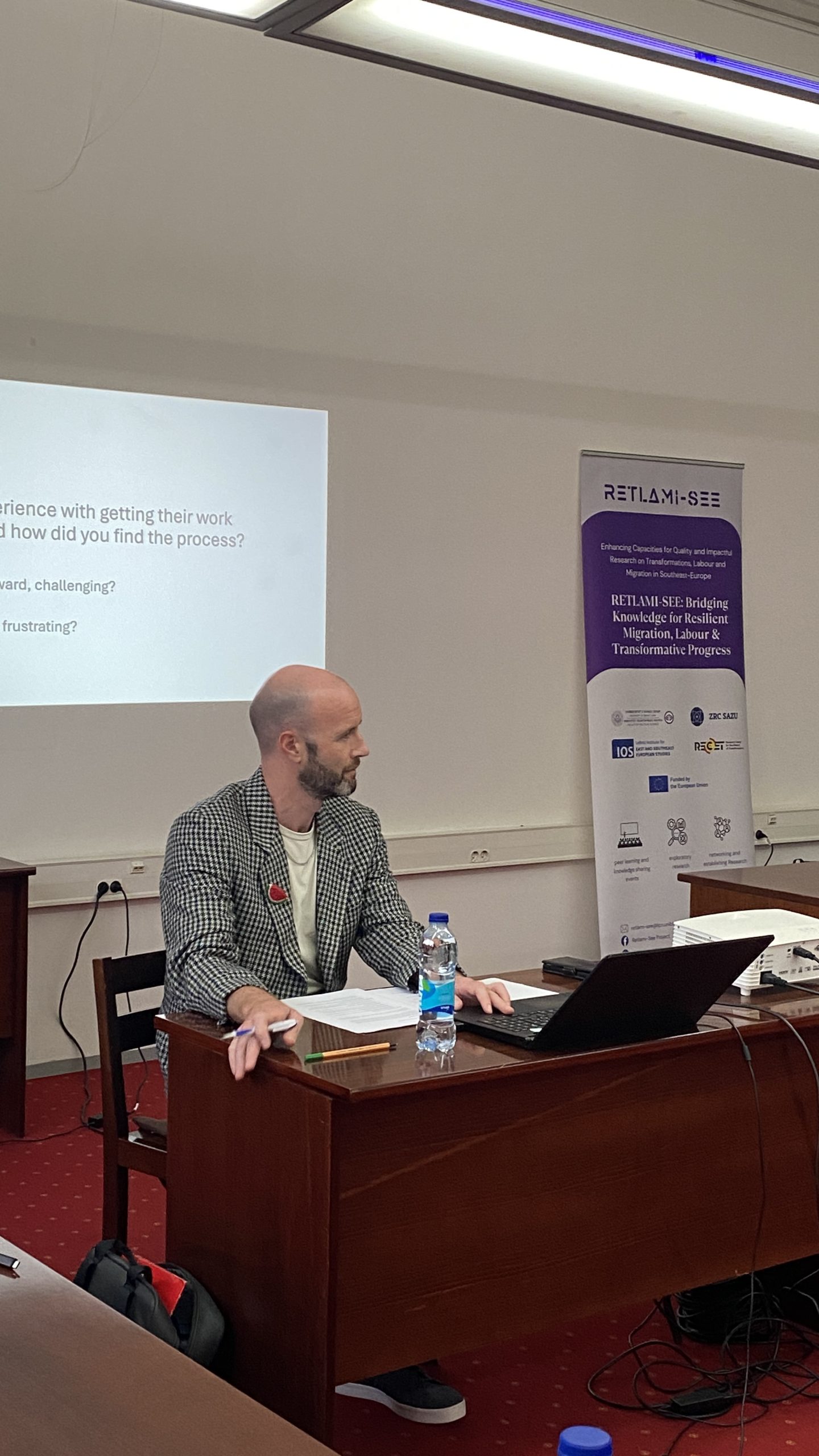
Publication Strategies for PhDs and Postdocs – Rory Archer – Rory Archer (RECET)
The second workshop focused on planning and executing effective publication strategies for early-career scholars. Rory Archer explained how to select an appropriate academic journal for one’s research, clarified the roles of journal editors and peer reviewers in the publication process, and offered strategies for responding to reviewer comments. The discussion addressed the importance of a journal’s reputation (rankings and impact factor), but also practical considerations such as its topical scope, indexing in scholarly databases, publication frequency, and acceptance rate. It was highlighted that success in academic publishing is not defined only by journal metrics; equally important is building a research network, presenting results at academic conferences, and following a long-term publication plan that supports the development of one’s academic career.
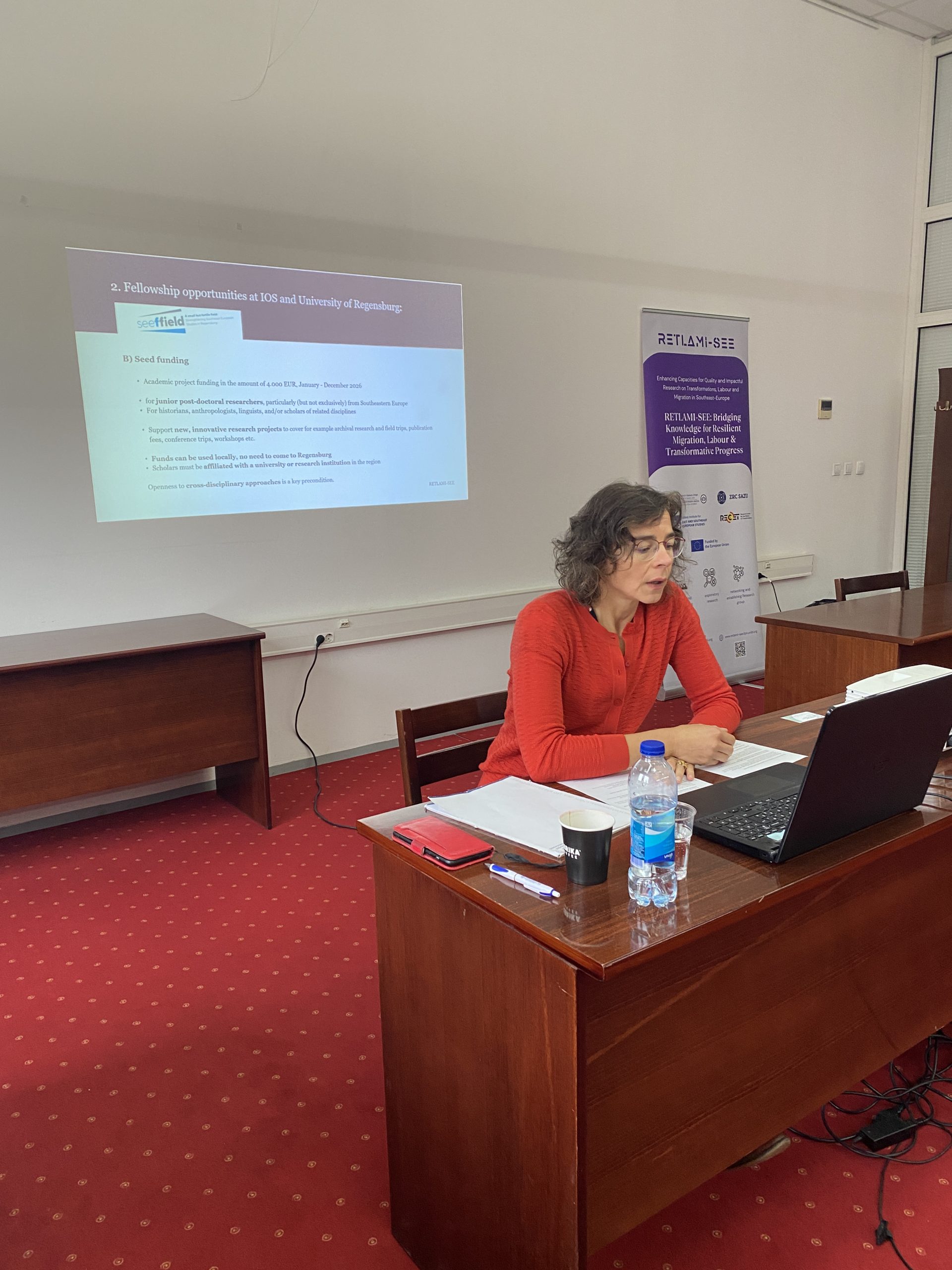
Fellowship Opportunities in Bavaria & Germany – Dr. Jacqueline Nießer (IOS Regensburg)
On the second day, a workshop provided an overview of various fellowship and mobility programs in Germany (especially in Bavaria) open to young researchers from Southeast Europe and beyond. Dr. Jacqueline Nießer outlined several funding schemes, including:
- IOS Regensburg visiting fellowships (research stays at the Leibniz Institute for East and Southeast European Studies),
- SEEField fellowship programs for scholars from Southeast Europe,
- initiatives of the Leibniz ScienceCampus “Europe and America in the Modern World” in Regensburg,
- Bavarian mobility grants and language scholarships through BAYHOST,
- DAAD research grants for doctoral and postdoctoral research.
During this session, participants learned about upcoming calls, application requirements, and key criteria, and received useful advice on how to match their qualifications and research interests with the right fellowship or mobility program. For those considering an international research stay or seeking funding for their projects, this workshop provided very helpful guidance and motivation.
Alexander von Humboldt Fellowships – Prof. Ulf Brunnbauer (IOS Regensburg)
The final workshop was dedicated to the prestigious fellowships of the Alexander von Humboldt Foundation, which support research stays in Germany. Prof. Ulf Brunnbauer familiarized participants with the special features of this program and answered practical questions about the application process:
- Humboldt research fellowships are awarded to individual researchers (as a personal award), rather than funding a specific project.
- There are no fixed quotas by country or field, which means competition is intense (the average success rate is around 30%).
- Postdoctoral fellowships can last up to 24 months; the fellowship includes support for German language training as well as a research allowance provided to the host institution.
- The role of the host institution is crucial: providing mentorship, academic supervision, and helping the fellow integrate professionally into the local research environment.
- The Humboldt Foundation fosters a broad alumni network and offers follow-up funding programs to continue collaborations even after the initial fellowship ends.
This detailed session clarified important application criteria, expectations regarding language proficiency, and even questions about publication records as they relate to the application.
Workshop for Research Management and Administration (RMA) Staff
In honor of the tenth annual Research Administrator Day (celebrated on 25 September), a special workshop was also held for staff involved in research management and administration. This session provided a valuable platform for exchanging knowledge and experiences among UNIBL’s RMA professionals, with the aim of building a strong network of key contact points for research support across the university. Special thanks go to Tina Mihelič, Mimi Urbanc, and Vanda Baloh from ZRC SAZU for their outstanding presentation “Organizing Post-Award Support: a Step-by-Step Approach and Experience from ZRC SAZU.” Their talk highlighted the crucial steps in organizing support after a project is awarded, illustrated with practical examples from ZRC SAZU’s experience.
Over the course of two days, the workshops at FPN Banja Luka enabled both young researchers and administrative staff to enhance their skills and gain new knowledge. The advice and connections gained will greatly benefit the participants in their future career development, fully aligning with the RETLAMI-SEE project’s goals of strengthening research capacities and fostering international cooperation. The Faculty of Political Science University of Banja Luka, extends its gratitude to the visiting experts from the partner institutions (RECET, ZRC SAZU, IOS Regensburg) for sharing their expertise and helping empower our academic community.