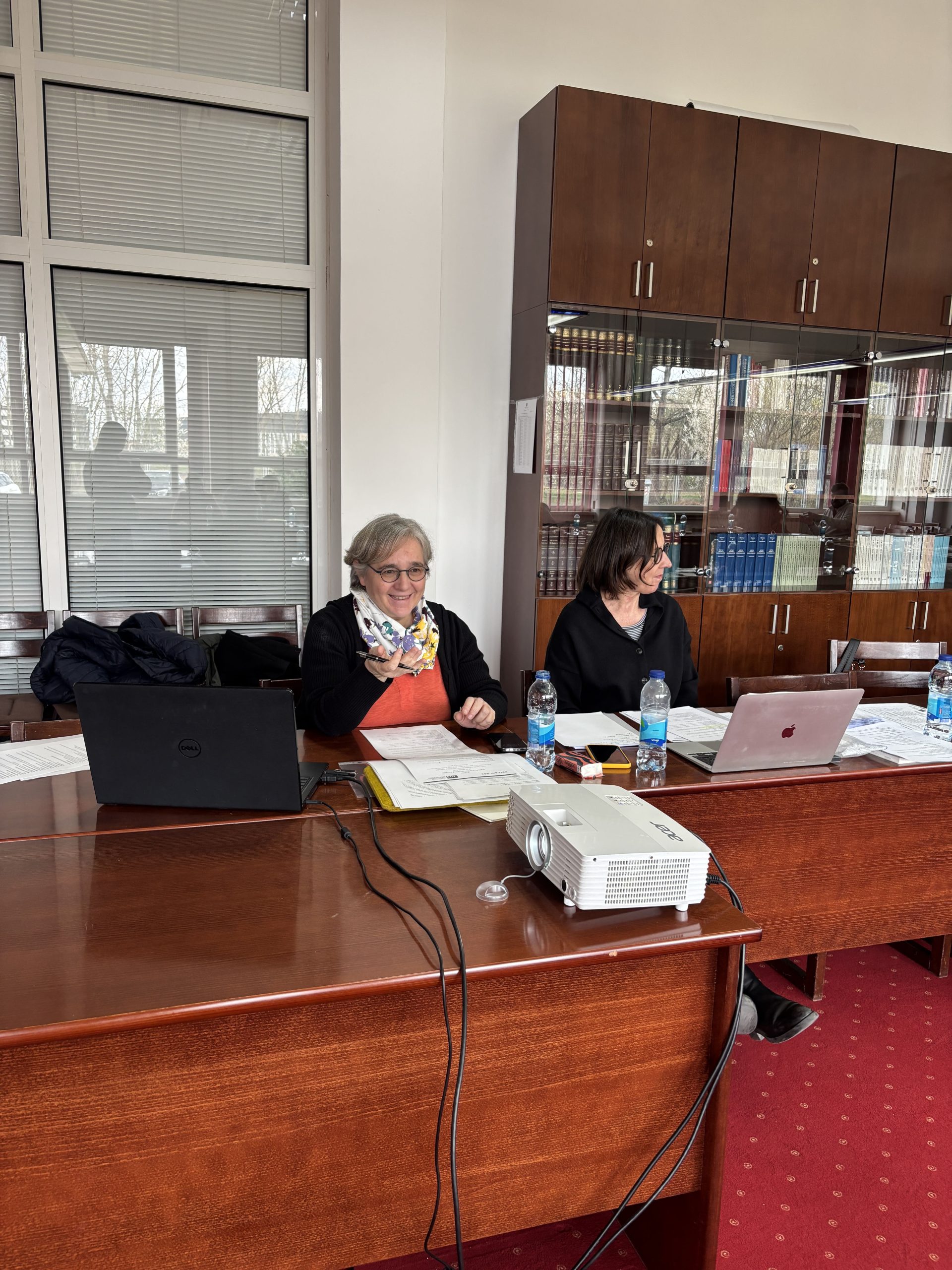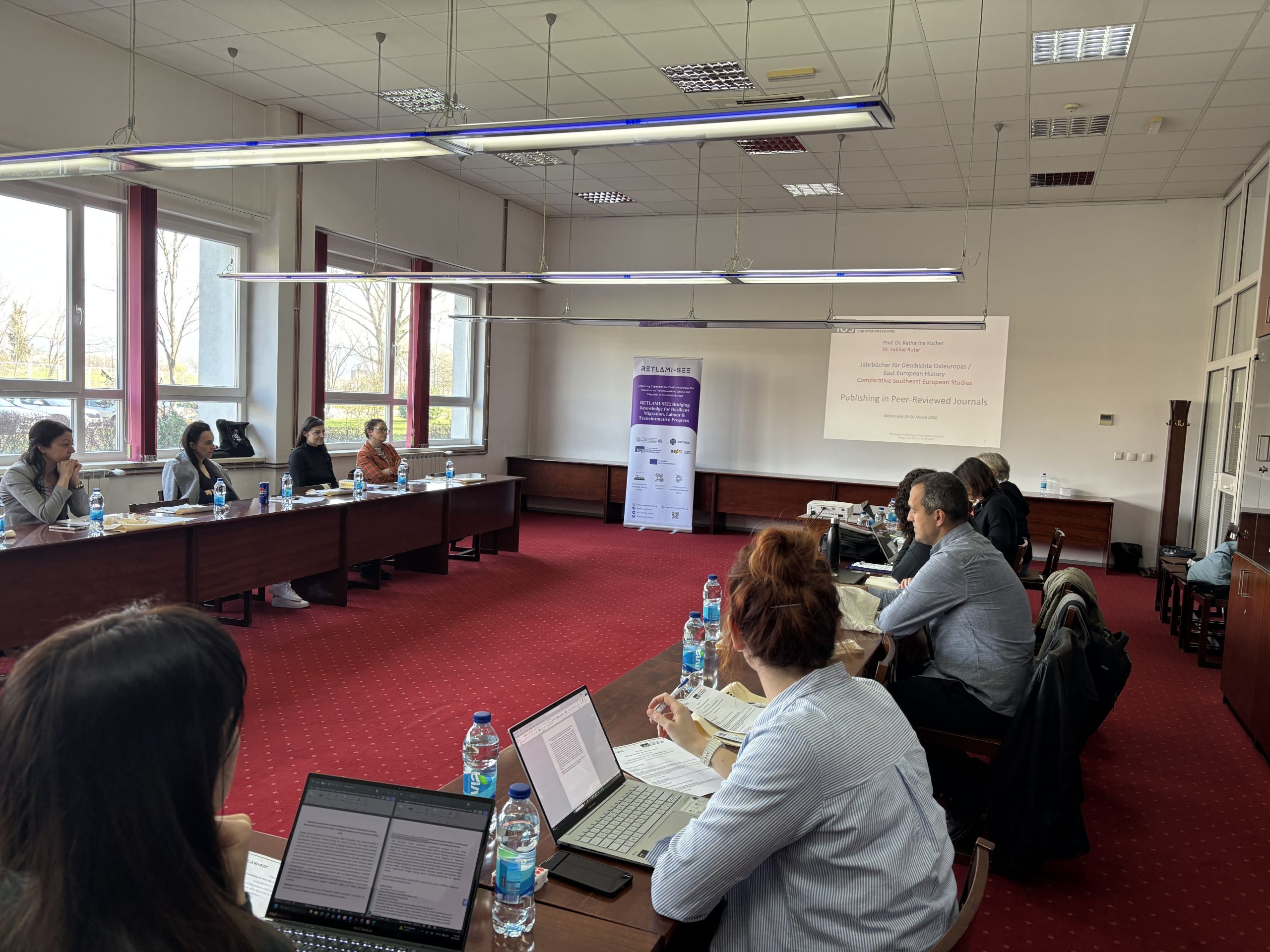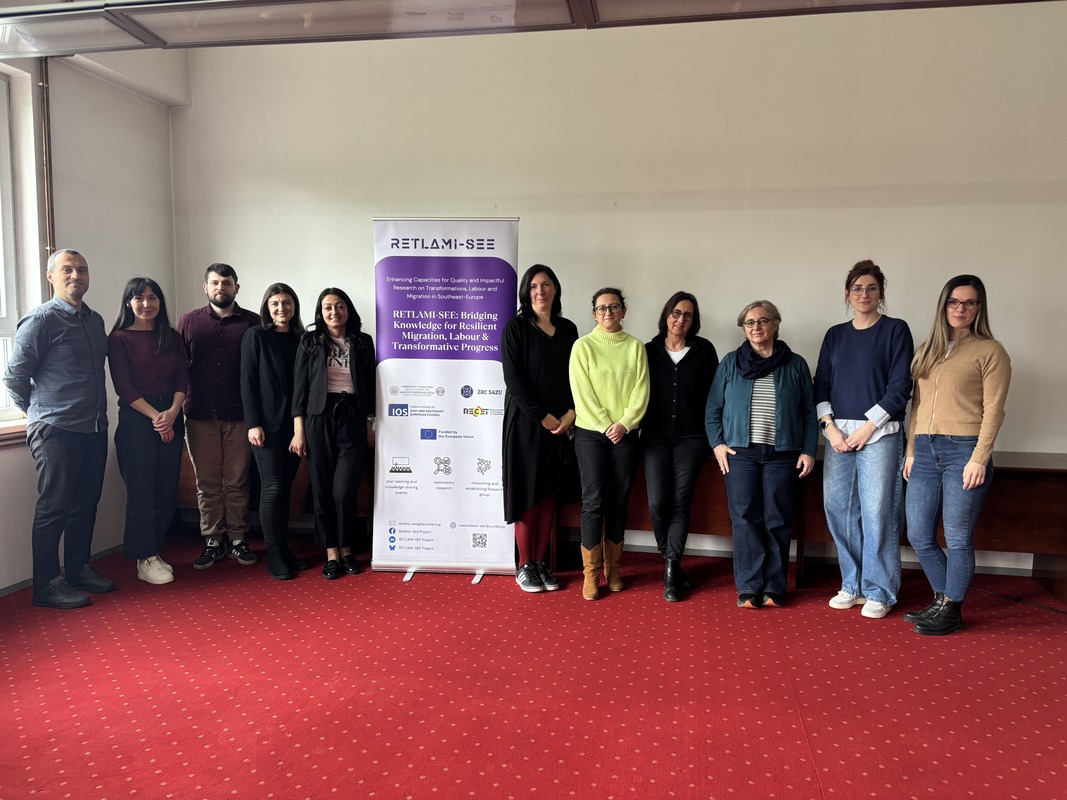
On 19–20 March 2026, the RETLAMI-SEE project organised a two-day workshop, “Publishing in Peer-Reviewed Journals,” at the Faculty of Political Sciences, University of Banja Luka (UNIBL). The workshop was facilitated by journal editors from the Leibniz Institute for East and Southeast European Studies (IOS), Regensburg— Dr Sabine Rutar (Comparative Southeast European Studies) and Prof. Dr. Katharina Kucher (Jahrbücher für Geschichte Osteuropas)—and was designed as a strongly hands-on programme combining editorial insight with intensive group work and peer exchange.
A workshop built around practice, not lectures
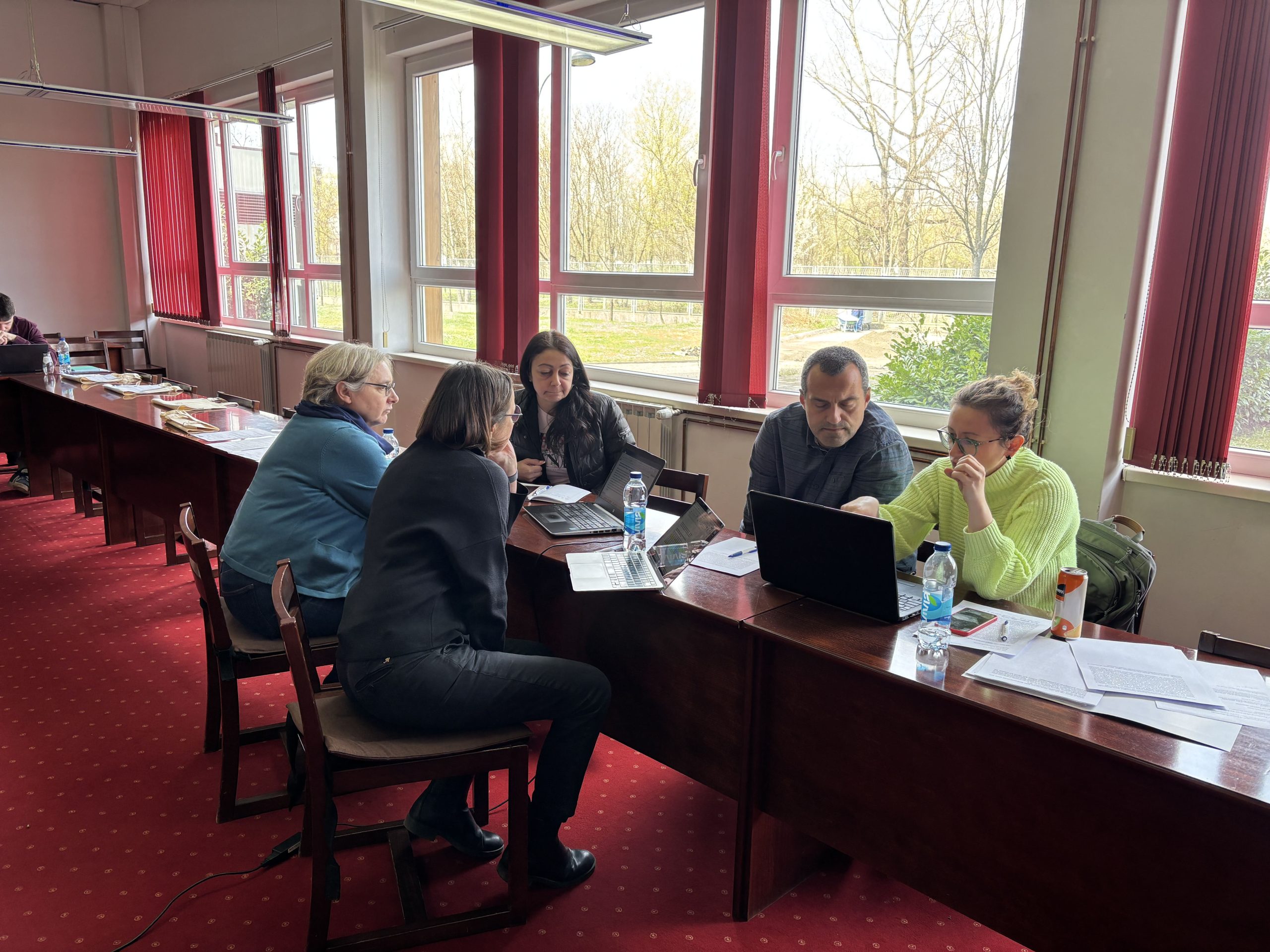
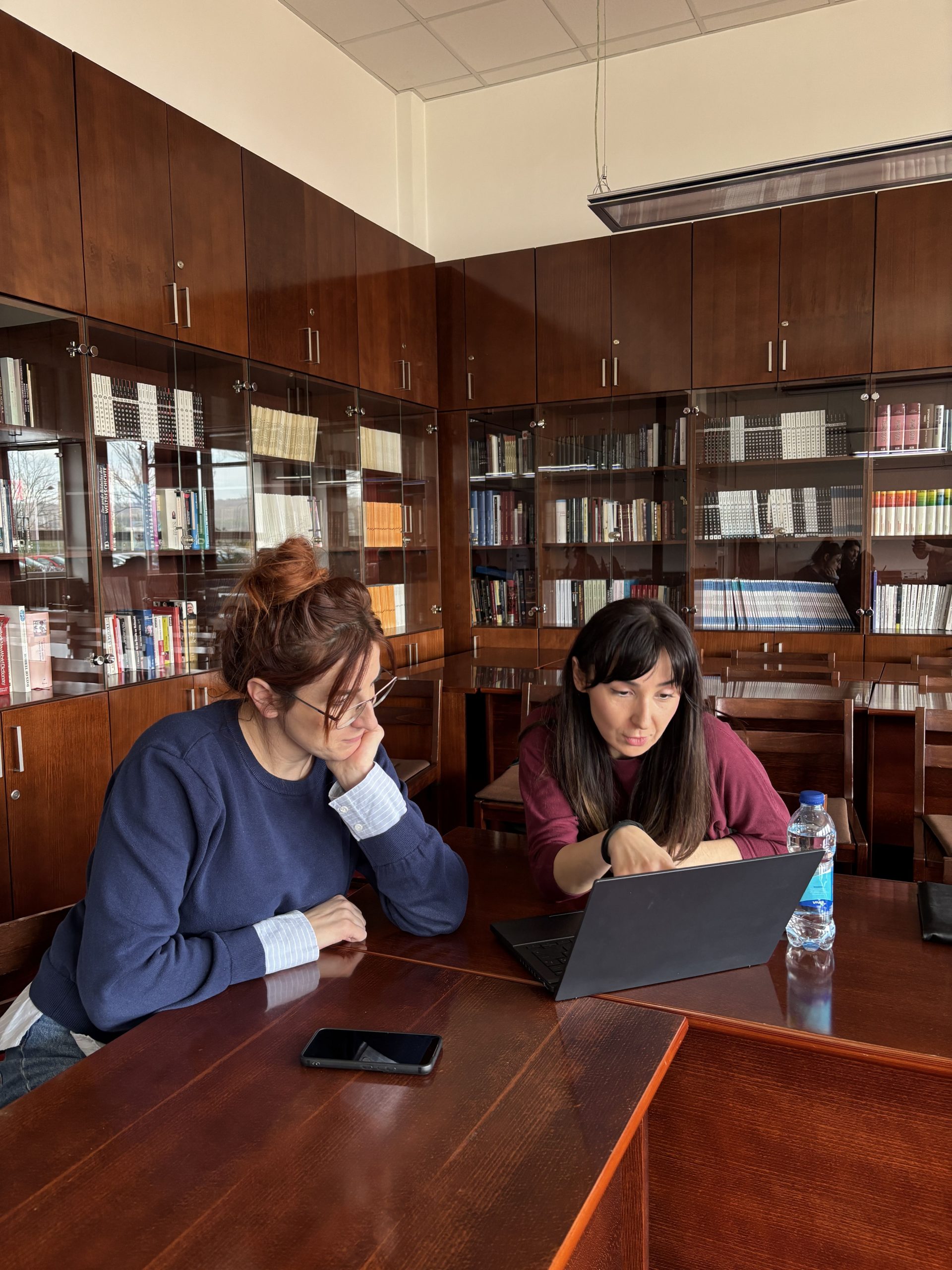
Instead of focusing on “tips and tricks” in the abstract, the workshop was structured around hands-on activities. Participants worked extensively on:
- clarifying and sharpening research questions
- polishing article abstracts through iterative rewriting
- identifying typical disciplinary dilemmas (conceptual, methodological, and stylistic)
- understanding how decisions are made from both the editors’ perspective and the authors’ perspective
This format helped make the publishing process more transparent—especially the points where misunderstandings often arise: what journals expect from “fit,” how reviewers interpret novelty and contribution, and why strong ideas sometimes struggle when the framing is not fully aligned with a journal’s scope and audience.
Multidisciplinarity as a learning resource
One of the most valuable aspects of the workshop was the composition of the group itself. Participants came from different scientific disciplines and brought different publishing experience—from those preparing a first submission for a international journal to colleagues with established international publication records.
Rather than being an obstacle, this diversity became a resource. It helped illuminate the real-life challenges of multidisciplinary work: differences in terminology, evidence standards, argument structures, and what counts as a “good” research contribution across fields. Through open discussion, the group surfaced dilemmas that often remain implicit in interdisciplinary projects—and worked toward mutual understanding of what each discipline tends to prioritise. The workshop therefore went beyond improving individual texts: it also strengthened participants’ capacity to communicate across disciplinary boundaries and to recognise the productive potential (and common pitfalls) of multidisciplinary approaches.
Concrete outputs: stronger abstracts, clearer positioning, and new connections
By the end of the two days, participants left with:
- revised abstracts and clearer next steps for improvement
- more precise research questions and stronger alignment between questions, methods, and claims
- practical insight into how to position a manuscript for peer-reviewed publication
- strengthened peer networks and new interdisciplinary connections within UNIBL
Importantly, the workshop generated a supportive environment of exchange: participants not only received feedback, but also practiced giving it—learning how to articulate what works, what confuses, and what could be strengthened in a way that is constructive and collegial.